Rabies remains one of the most feared diseases in Kenya — and for good reason. It is almost always fatal once clinical symptoms appear, and it can be transmitted to humans through the bite or scratch of an infected animal. However, it is also 100% preventable through vaccination. This guide covers the stages of rabies, what to look for, and how vaccination protects your family.
Critical Warning
If you suspect your dog has rabies, do NOT approach or handle the animal. Contact a veterinarian immediately. If you have been bitten or scratched by an animal that may have rabies, wash the wound thoroughly with soap and running water for 15 minutes and seek medical attention at the nearest hospital or health centre at once. Time is of the essence.
What Is Rabies and How Is It Spread?
Rabies is a viral disease that attacks the central nervous system and is almost invariably fatal once symptoms appear. The virus is present in the saliva of infected animals and is transmitted through bites, scratches, or contact of saliva with mucous membranes. In Kenya, domestic dogs account for over 95% of human rabies cases.
The Three Stages of Rabies in Dogs
Rabies progresses through three distinct stages. Recognising the early signs is critical because once clinical symptoms appear, the disease is almost always fatal.
Stage 1: Prodromal Stage (2-3 days)
The earliest phase where subtle behavioural changes appear. A friendly dog may become withdrawn, or an independent dog unusually clingy. Look for anxiety, restlessness, licking the bite wound, mild fever, and changes in vocalisation.
These prodromal signs are easily missed. Any unexplained behavioural change in a dog with unknown vaccination status should raise suspicion.
Stage 2: Furious Stage (1-7 days)
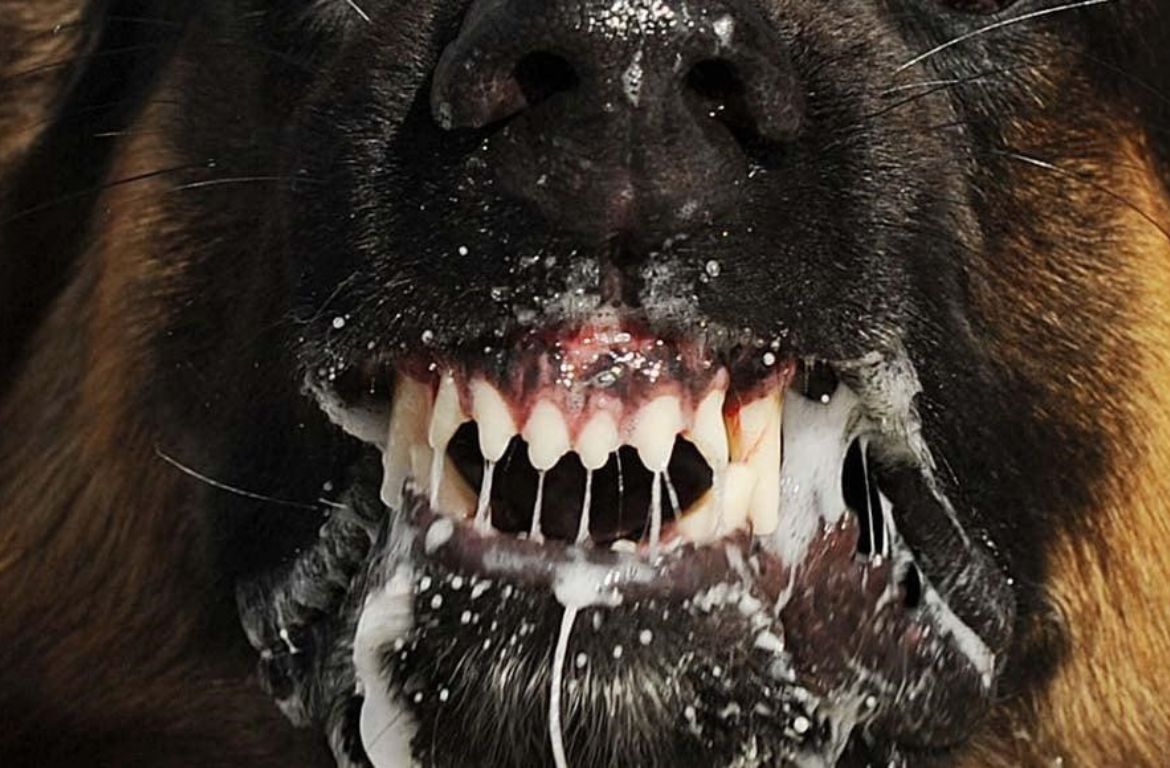
The most recognisable form. The dog becomes extremely aggressive, attacks without provocation, and may eat inedible objects. Symptoms include excessive drooling, disorientation, seizures, and loss of fear of humans. A dog in this stage is extremely dangerous — do not approach.
- Extreme aggression — attacks without provocation, bites at objects, people, and other animals. May attack inanimate objects like fences, walls, and food bowls.
- Hydrophobia (fear of water) — difficulty and pain on swallowing; the dog may appear to be choking, gag, or drool excessively when trying to drink.
- Excessive drooling and foaming at the mouth — caused by paralysis of the throat muscles, making it impossible to swallow saliva. This is the classic "foaming at the mouth" image associated with rabies.
- Disorientation and roaming — the dog may wander aimlessly, covering long distances, and become lost even in familiar surroundings.
- Seizures and muscle tremors — neurological signs reflecting brain inflammation.
- Pica — eating inedible objects like stones, wood, sticks, plastic, soil, and faeces.
- Loss of fear of humans — a normally shy dog may approach people fearlessly (or attack them).
- Photophobia — sensitivity to light.
A dog in the furious stage is extremely dangerous. Do not approach, attempt to restrain, or make direct eye contact. Call a veterinarian or animal control immediately.
Stage 3: Paralytic (Dumb) Stage (2-4 days)
Progressive paralysis begins in the hind legs and moves forward. The lower jaw droops, causing profuse salivation. Some dogs develop only this form without a preceding aggressive phase, appearing deceptively "quiet." Death typically occurs within 10 days due to respiratory paralysis.
- Progressive paralysis — usually begins in the hind legs and moves forward (ascending paralysis), eventually affecting the whole body.
- Lower jaw droops — the dog cannot close its mouth, giving a characteristic "dumb" or "blank" facial expression.
- Profuse salivation — saliva pools and drools continuously because the dog cannot swallow.
- Difficulty breathing — paralysis of respiratory muscles.
- Coma and death — usually occurs within 10 days of the first symptom. Death is typically due to respiratory paralysis.
Rabies Diagnosis in Kenya
Definitive diagnosis requires laboratory testing of brain tissue from a deceased animal. Tests include the Direct Fluorescent Antibody (DFA) test, histopathology, and PCR testing, available at KEVEVAPI in Kabete and KEMRI.
In Kenya, rabies testing is performed at the Central Veterinary Laboratories in Kabete (Kenya Veterinary Vaccines Production Institute — KEVEVAPI) and at the Kenya Medical Research Institute (KEMRI). If human exposure has occurred, testing of the suspected animal is urgent to guide post-exposure prophylaxis decisions.
What to Do If You Suspect Rabies
Your actions in the first few hours can make the difference between life and death. Follow these steps: Do NOT approach the dog if aggressive. Isolate it safely. Call a veterinarian immediately at +254 708 274 925. If bitten, wash the wound with soap and running water for 15 minutes and seek medical attention for post-exposure prophylaxis immediately. Report the case to local veterinary authorities — rabies is a notifiable disease in Kenya.
Post-Exposure Prophylaxis (PEP) for Humans
If bitten, immediate medical attention is critical. PEP is highly effective when administered promptly and includes immediate wound care, rabies immunoglobulin (RIG), and a rabies vaccine series on days 0, 3, 7, and 14. PEP is available at major Nairobi hospitals including Kenyatta National Hospital and Nairobi Hospital. Time is critical — treatment should begin within hours of exposure.
"In our practice at Agrinovetec Kenya, we remind every dog owner that rabies is a reportable disease under Kenyan law. If you see any signs of rabies in your dog or a stray animal, you have a legal and moral obligation to report it to the nearest veterinary office or public health authority. Vaccination is not optional — it is every dog owner's responsibility."
Quarantine Procedures in Kenya
Exposed vaccinated dogs should receive a booster and be confined for 45 days. Exposed unvaccinated dogs require strict quarantine for 6 months or euthanasia. Dogs showing rabies symptoms must be euthanised and tested. If a dog bites a person, it should be confined and observed for 10 days — if it remains healthy, no rabies transmission occurred at the time of the bite.
Vaccination Laws in Kenya
Under the Veterinary Surgeons Act and Public Health Act, all dogs must be vaccinated against rabies annually. Failure to vaccinate can result in fines, and if your unvaccinated dog bites someone, you may face legal liability. Rabies is a notifiable disease — suspected cases must be reported to the Director of Veterinary Services.
Stray Dog Management
Stray dogs serve as a primary rabies reservoir. Mass vaccination campaigns targeting at least 70% of the dog population, including strays, is the most effective control strategy. Catch-Neuter-Vaccinate-Release (CNVR) programs humanely reduce stray populations. Report aggressive or sick strays to local authorities or KSPCA.
Global Rabies Elimination Efforts
The "Zero by 30" global strategic plan aims to eliminate human deaths from dog-mediated rabies by 2030, led by WHO, OIE, FAO, and GARC. Kenya is a signatory with a National Rabies Elimination Strategy focusing on mass dog vaccination, improved PEP access, and public education.
Prevention: The Only Reliable Protection
There is no effective treatment once symptoms appear. Prevention through vaccination is the only reliable protection. Vaccinate your dog annually, keep it confined or supervised, report strays, and educate children never to approach unknown dogs. Puppies receive their first rabies vaccine at 14-16 weeks, with annual boosters thereafter. Our Nairobi clinic offers walk-in vaccinations and mobile services for multiple dogs.
Prevention Checklist
- Annual rabies vaccination — never miss a booster
- Keep your dog confined or supervised when outside
- Report stray or sick-looking dogs to local authorities
- Educate children never to approach unknown dogs
- Spay or neuter to reduce roaming behaviour
Learn About Rabies Prevention
Rabies kills, but vaccination saves lives. Call +254 708 274 925 to learn more about rabies prevention for your dog.
Learn More