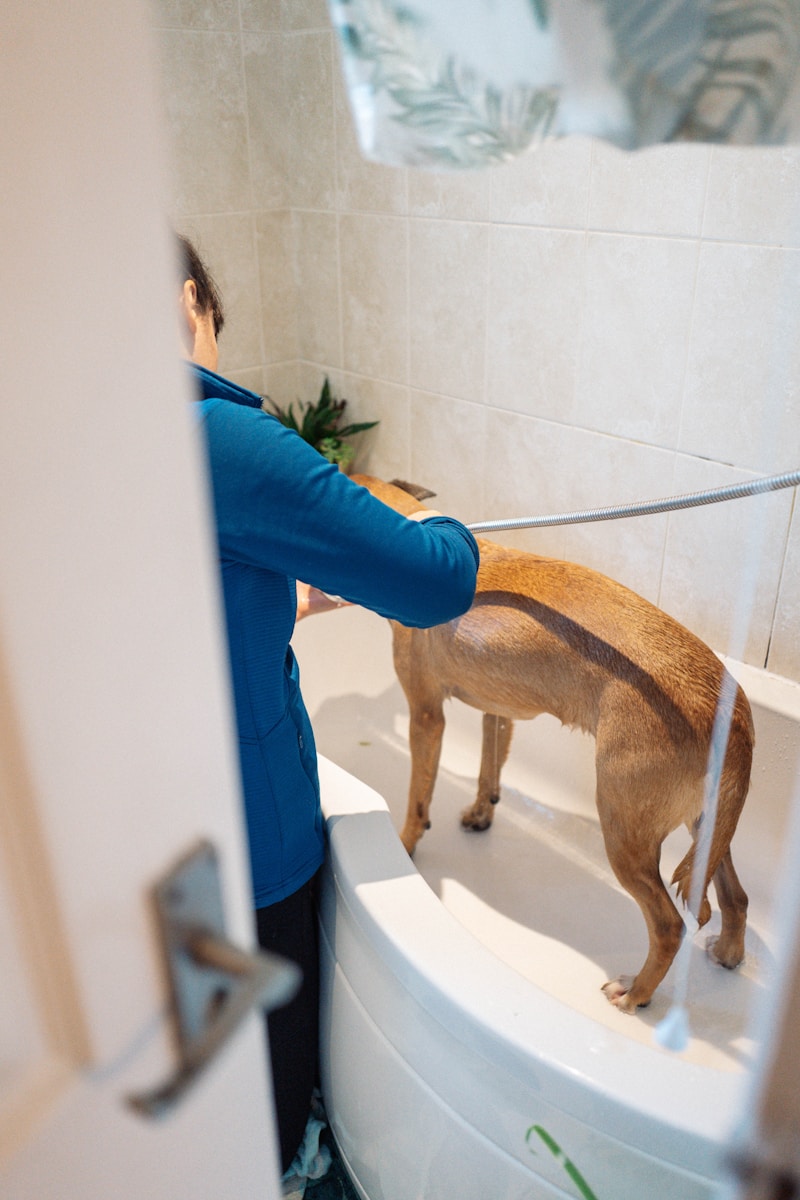
Grooming prevents matting, reduces shedding, and helps spot health problems early. The right schedule depends on breed, coat type, and lifestyle.
Why Regular Grooming Matters
- Prevents matting and infections — matted fur traps moisture and bacteria, causing dermatitis and hot spots.
- Early detection — lumps, ticks, ear infections, and skin issues are often first found by groomers.
Dog Grooming Frequency by Coat Type
Short-haired breeds
Examples: Boxers, Beagles, Dalmatians
- Professional grooming: every 8-12 weeks
- Brush weekly; nails every 3-4 weeks
Double-coated breeds
Examples: German Shepherds, Golden Retrievers, Huskies
- Professional grooming: every 6-8 weeks
- Brush 2-3 times per week; daily during shedding season; nails every 3-4 weeks
Long-haired / Silky coats
Examples: Shih Tzus, Yorkshire Terriers, Maltese
- Professional grooming: every 4-6 weeks
- Brush daily; nails every 3-4 weeks
Curly / Wire-haired breeds
Examples: Poodles, Schnauzers, Bichon Frises
- Professional grooming: every 4-8 weeks
- Brush 3-4 times per week; nails every 3-4 weeks
Important for Nairobi Pet Owners
Nairobi's warm climate means fleas and ticks are active year-round. The rainy seasons (March-May and October-December) increase humidity, worsening skin infections in pets with thick coats. Regular grooming helps you spot these issues early.
Cat Grooming Frequency
Short-haired cats
Examples: Domestic Shorthair, Siamese, Burmese
- Professional grooming: every 3-4 months
- Brush weekly; nails every 2-3 weeks
Long-haired cats
Examples: Persians, Maine Coons, Ragdolls
- Professional grooming: every 4-6 weeks
- Brush daily; nails every 2-3 weeks
Cat Grooming Specifics — Lion Cuts and Sanitary Trims
- Lion cut — shaves the body short leaving fur on head and tail tip. Ideal for severe matting and Nairobi's warmer months.
- Sanitary trim — trims rear and abdomen fur to prevent soiling. Essential for long-haired and elderly cats.
Professional Grooming Checklist
At Agrinovetec Kenya, a full session includes thorough brushing, de-matting, a warm bath with pet-safe shampoo, breed-specific trim, nail care, ear cleaning, teeth brushing, and a final health check.
How to Choose a Professional Groomer
- Qualifications — certified groomers have completed accredited programmes.
- Clean facility — the salon should be clean, well-organised, and odour-free.
- Gentle handling — groomers should use positive methods. Pets should appear calm.
Dealing with Anxious Pets During Grooming
- Pre-visit preparation — bring your pet for a short "happy visit" to meet the groomer.
- Pheromone products — Adaptil (dogs) or Feliway (cats) diffusers reduce anxiety.
- Veterinary involvement — we coordinate grooming with vet care for severely anxious pets.
Seasonal Grooming Tips for Nairobi's Climate
- Rainy seasons (March-May, October-December) — increased humidity promotes skin infections. Keep coats clean and dry after walks.
- Dry season (January-February, June-September) — lower humidity causes dry skin. Use moisturising shampoos and omega-3 supplements.
- Flea and tick season — active year-round, peaking during rains. Grooming helps spot parasites early.
Skin Conditions Spotted During Grooming
- Hot spots — painful, moist, inflamed areas caused by allergies or flea bites.
- Ringworm — circular hair loss with scaling. Highly contagious to humans and pets.
- Lumps and bumps — any new or changing lump should be evaluated by a vet.
Hypoallergenic Breeds and Grooming
No breed is truly hypoallergenic, but some produce less dander and shed less.
- Poodles — need professional grooming every 4-6 weeks.
- Yorkshire Terriers — need daily brushing and grooming every 4-6 weeks.
- Sphynx (hairless cats) — need weekly bathing and sun protection.
Grooming Tips for Between Professional Visits
- Brush regularly — distributes natural oils, removes loose fur, prevents matting.
- Check for ticks and fleas after every walk — Nairobi ticks transmit ehrlichiosis and babesiosis.
- Paw care — check for cracks and foreign objects. Use paw balm in dry season.
When to See a Veterinarian Instead of a Groomer
- Skin infections, open wounds, or hot spots
- Severe matting requiring sedation to remove safely
- Signs of ear pain or infection (head shaking, discharge, odour)
- Severe anxiety or aggression requiring a vet behaviour consult
At Agrinovetec Kenya, our grooming service is backed by our veterinary team. If a health issue is spotted during grooming, we address it immediately.
"We see too many pets in our clinic whose owners waited too long between grooming sessions. Matting can become so severe that the only humane solution is to shave the entire coat under sedation, which is stressful, expensive, and entirely avoidable with regular care. Regular, smaller grooming visits prevent bigger problems and cost less in the long run."
Learn About Professional Grooming
Treat your pet to a professional groom at our Nairobi clinic. Call +254 708 274 925 to learn more.
Learn More